

Content Creator
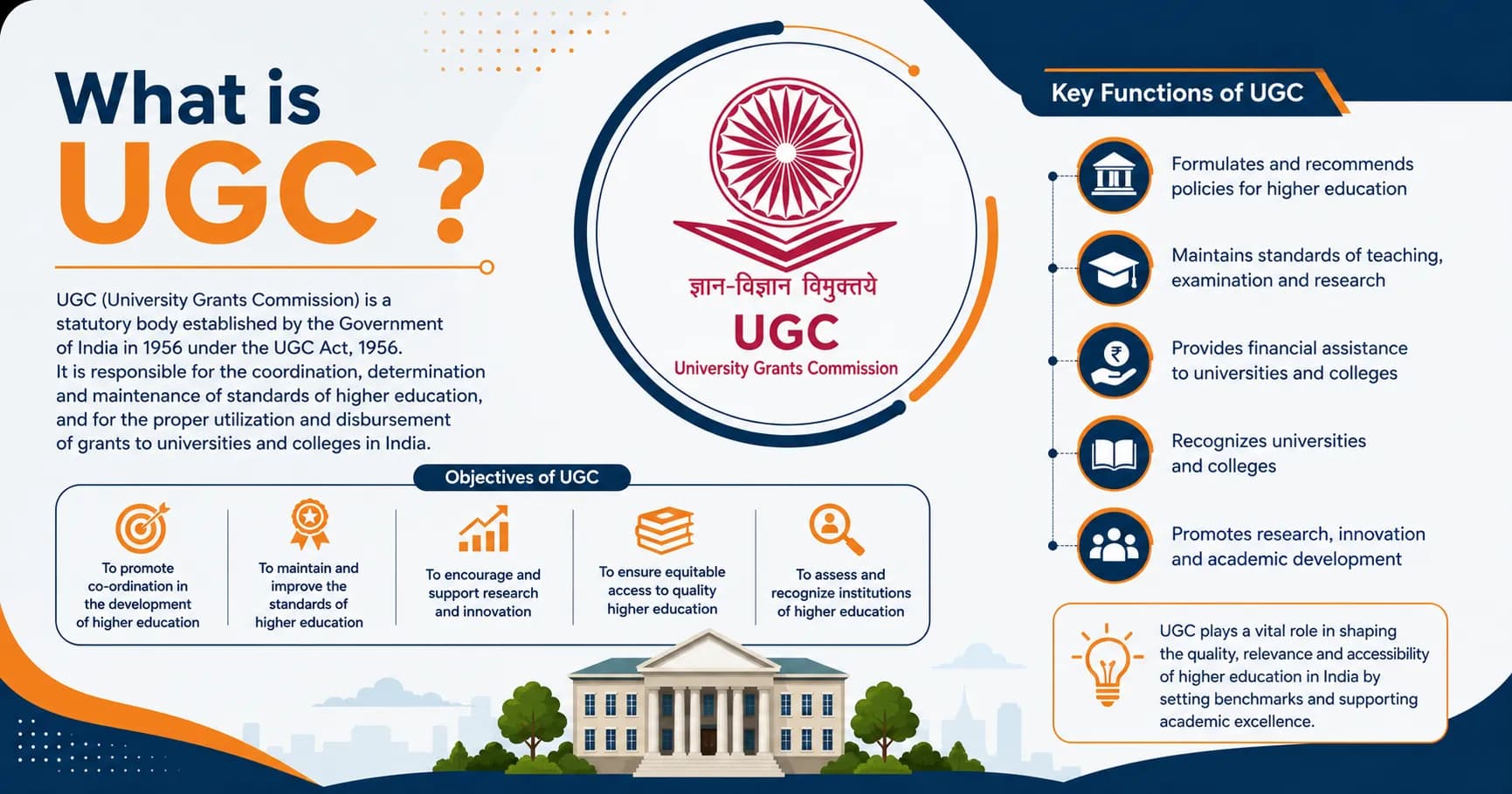
Many students who plan to study in India come across the term UGC-approved university. University Grants Commission (UGC) is the organization that approves universities and helps maintain the quality of higher education in the country. Before students take admission, it is important to check if a university is approved by the UGC. A degree from a UGC-approved university is generally accepted for higher education, government jobs, and many career opportunities. Here we explains what UGC is and why UGC approval is important for students.
UGC known as University Grants Commission is the key regulatory agency, which coordinates and regulates standards in higher education in India. Being established by the Indian government, UGC acts within the framework of the Ministry of Education in order to make sure that all the universities offer quality education, follow academic regulations, and confer qualified degrees. The key functions of the agency include recognition of universities, creation of academic regulations, development of innovations, faculty development, financial assistance, and protection of students from non recognized institutions.
University Grants Commission cooperates with universities, colleges, accreditation agencies, and governmental organizations to carry out educational reforms.
UGC stands for University Grants Commission. This is a statutory body that was set up as per the University Grants Commission Act of 1956. This regulatory body looks after higher educational institutions in the country by ensuring that they maintain consistent academic standards and provide quality education.
| Abbreviation | Full Form |
| UGC | University Grants Commission |
The University Grants Commission (UGC) plays an important role in India's higher education system. Before learning about its functions and importance, it is helpful to know some basic facts about the UGC. The table below gives a quick overview of its establishment, headquarters, governing ministry, and main responsibilities.
| Particular | Details |
| Full Form | University Grants Commission |
| Established | 28 December 1953 |
| Statutory Status | UGC Act, 1956 |
| Governing Ministry | Ministry of Education, Government of India |
| Headquarters | New Delhi |
| Nature | Statutory Body |
| Chairman | Appointed by the Government of India |
| Primary Role | Coordination, regulation, and maintenance of higher education standards |
| Jurisdiction | Universities and Higher Educational Institutions across India |
| Official Website | ugc.gov.in |
The University Grants Commission (UGC) was established to regulate higher education in India and maintain the quality of education across universities. It helps set academic standards, supports research, provides grants to eligible institutions, and ensures that students receive education from recognized universities.
Objectives of UGC
Maintain uniform academic standards across universities.
Coordinate higher education institutions.
Promote quality teaching and learning.
Provide grants to eligible universities.
Encourage research and innovation.
Develop higher education policies.
Improve faculty development.
Promote digital education initiatives.
Protect students from fake and unrecognized universities.
Strengthen India's higher education ecosystem.
The University Grants Commission has played a significant role in transforming India's higher education landscape. Since its establishment, UGC has introduced several reforms to improve academic quality, promote research, and regulate universities. Over the years, its responsibilities have expanded in line with the changing needs of higher education.
History and Evolution of UGC
| Year | Development |
| 1945 | The idea of a university grants body was first proposed during the British period. |
| 1948–49 | The University Education Commission recommended establishing a central authority for universities. |
| 1953 | The University Grants Commission was established on 28 December 1953. |
| 1956 | Parliament enacted the University Grants Commission Act, 1956, giving UGC statutory status. |
| 1970s | Financial support for universities and research activities expanded significantly. |
| 1990s | Focus shifted toward academic reforms, faculty development, and quality assurance. |
| 2000–2015 | New regulations introduced for distance education, curriculum reforms, and institutional development. |
| 2020 | UGC began implementing reforms aligned with the National Education Policy (NEP) 2020. |
| 2024–2026 | Greater emphasis on multidisciplinary education, Academic Bank of Credits (ABC), online learning, and digital education initiatives. |
The University Grants Commission follows a structured process to regulate and monitor higher education institutions in India. Universities looking recognition must meet specific academic, administrative, and infrastructure standards set under the UGC Act. Once recognized, institutions are regularly monitored to ensure continued compliance with UGC regulations.
The University Grants Commission works through an efficient administrative system involving senior officers and education specialists. Through this system, the University Grants Commission can develop policies, regulate universities, reform and monitor different facets of university education.
| Position | Role and Responsibility |
| Chairperson | Heads the Commission and provides overall leadership. |
| Vice-Chairperson | Assists the Chairperson in policy implementation and administration. |
| Commission Members | Experts who contribute to academic and regulatory decisions. |
| Secretary | Oversees day-to-day administrative operations. |
| Bureaus & Divisions | Manage areas such as finance, research, scholarships, digital education, and regulations. |
| Expert Committees | Recommend academic reforms, curriculum updates, and quality enhancement measures. |
University Grants Commission (UGC) plays an important role in a student's education journey. It ensures that universities follow the required academic standards and provide quality education. Studying at a UGC-approved university also gives students a degree that is accepted for higher studies, government jobs, private jobs, and many other career opportunities. The points below explain why UGC approval is important for students.
| Benefit | Why It Matters |
| Degree Validity | Ensures the degree is recognized across India. |
| Government Jobs | Required for eligibility in many government recruitment processes. |
| Higher Education | Accepted for postgraduate and doctoral admissions. |
| Scholarships | Enables students to apply for various government scholarships and fellowships. |
| Academic Quality | Universities must follow UGC-prescribed academic standards. |
| Career Opportunities | Improves credibility with employers in both public and private sectors. |
| Research Opportunities | Access to research grants and academic collaborations. |
| Student Protection | Safeguards students from enrolling in unrecognized institutions. |
One of the most important functions of the University Grants Commission is recognizing universities under the UGC Act, 1956. Institutions that meet the prescribed academic, administrative, and infrastructure requirements receive UGC recognition, allowing them to award valid degrees.
UGC recognition assures students that the university follows government-approved standards and its qualifications are accepted for higher education, employment, and competitive examinations.
The University Grants Commission derives its authority from the UGC Act, 1956, enabling it to regulate higher education institutions across India. These powers allow UGC to establish academic standards, recognize universities, issue regulations, and ensure compliance with national education policies.
India has different categories of universities, each established under specific legal provisions. The University Grants Commission recognizes these institutions based on their governing legislation, academic standards, and compliance with regulatory requirements.
Understanding these categories helps students identify the legal status and recognition of a university before applying for admission.
| University Type | Description |
| Central University | Established by an Act of Parliament and funded by the Central Government. |
| State University | Established through a State Legislature Act and funded primarily by the respective state government. |
| Private University | Established through a State Legislature Act and managed by private organizations or trusts. |
| Deemed to be University | Institutions granted "Deemed-to-be University" status by the Central Government on UGC's recommendation. |
| Open University | Universities offering distance and online education programmes. |
| Institution of National Importance | Premier institutions established by Parliament through separate Acts for specialized education and research. |
Students should make sure that a university is certified by the University Grants Commission before applying for admission to a university. Certification by UGC means that a university meets the requirements of the Government of India. In addition to that, degrees provided by universities certified by UGC are valid for pursuing higher education, working in government offices, obtaining scholarships, etc. Admission to universities certified by UGC is always beneficial for students as far as academics and careers are concerned.
| Benefit | Why It Matters |
| Degree Validity | Ensures the degree is legally recognized across India. |
| Government Jobs | Required for eligibility in many central and state government recruitments. |
| Higher Education | Accepted for postgraduate, doctoral, and professional programmes. |
| Scholarships | Students can apply for various government scholarships and fellowships. |
| Academic Standards | Universities must comply with UGC regulations and quality standards. |
| Employer Recognition | Degrees are widely accepted by employers in India and abroad. |
| Student Protection | Reduces the risk of studying in fake or unauthorized institutions. |
| International Opportunities | Recognized degrees are generally preferred for foreign education and employment evaluations. |
Students end up applying to universities without verifying their recognition. This is not a problem because verification of recognition can be easily done on the UGC website within a matter of minutes. It is always important to verify the recognition of a university before making any payments for admission purposes.
University Grants Commission plays a vital role in ensuring the quality of higher education in India. Students should first verify the validity of any university before joining it in terms of its recognition by the UGC. The degree received from a university that is recognized by the UGC will be valid for further studies, government jobs, and even career purposes.
© 2026 Nuvora Education Private Limited. All rights reserved.