

Content Creator
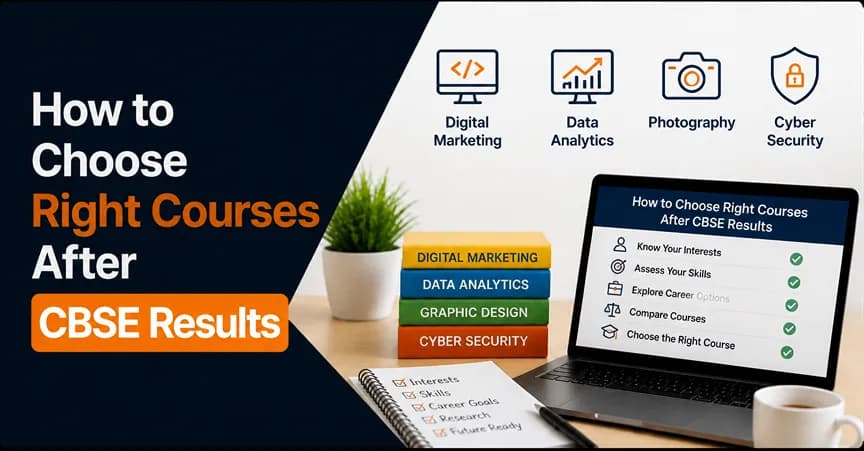
Choosing the right course after CBSE results is one of the most important decisions that any student can make. It will determine candidates' paths in higher studies, career choices, financial gains, and level of contentment. With endless options across various disciplines like Science, Commerce, Humanities, and skill-based areas, it is limitless. Here, we will help you understand how you can select the best course post CBSE results.
When the CBSE results are out, many students make hasty choices depending upon their marks, trends, or peer pressure. But in reality, a course must be selected based on student interests, abilities, and future career plans. An informed decision will enable students to:
Be more motivated during your education
Develop the necessary skills at an early stage
Experience greater career success
Not change careers in the future
A bad decision may result in a lack of interest, bad grades, and a lack of direction in their career.
Choosing the right choice will be easier if one approaches the decision in an organised manner rather than by using intuition alone. Check below the step-by-step process to choose the right course after CBSE Class 12:
1. Identify Your Interests
Interest is one of the important elements that should influence student choice of course. Students must ask themselves:
Which subjects do I enjoy studying the most?
What type of work excites me i.e, analytical, creative, or practical?
What do I naturally spend time learning or exploring?
Choosing a course aligned with your interests ensures long-term engagement.
2. Evaluate Strengths and Skills
Based on student academic success and basic skills, students can identify the most appropriate career option for them.
Strong in Mathematics → Engineering, Data Science
Good communication → Journalism, Law
Creative thinking → Design, Arts
Logical reasoning → Finance, Analytics
3. Take a Career Aptitude Test
Career aptitude tests assess students:
Personality traits
Skills and abilities
Interests
4. Research Career Opportunities
Before choosing a course, understand its career scope. Check below the key aspects to research:
Job roles
Salary trends
Industry demand
Growth opportunities
5. Understand the Course Curriculum
Do not select a course just by its name, understand what you will actually study.
Subjects included
Practical exposure
Internship opportunities
Skill development scope
6. Check Eligibility and Entrance Exams
Many courses require entrance exams, so early awareness is important.
7. Shortlist and Compare Colleges
The college you choose significantly impacts your career. Compare based on:
Placement records
Faculty quality
Infrastructure
Fees and ROI
8. Seek Guidance but Avoid Pressure
Guidance from parents, teachers, and mentors is useful, but your decision should not be influenced by pressure or trends.
Choosing the right course after CBSE is not only about choosing a particular stream. It requires evaluating multiple factors that directly impact your academic journey and future career. Making an informed choice would mean being consistent with what students enjoy doing, studying better, and creating an effective platform for a career. Before finalising any course, take time to assess the following key factors carefully:
Interest and Passion: Select a course or field that students are interested in. Passion will keep them going and assist students in maintaining consistency, especially during tough times.
Strengths and Abilities: Find out about the areas where students show strengths. These will assist them in studying better and gaining confidence in the chosen course of action.
Career Opportunities: Know about the different jobs that exist after completing the selected course. There should be proper scope for a good career.
Future Scope: Consider whether the course will hold relevance in the long run. Select the courses that are continuously developing and have high future demand.
Industry Demand: Check if the industry linked to the course is growing. The more in-demand it is, the greater students' chances of being hired.
Course Duration and Cost: Learn about the duration of the course and the financial investment you need to make. Select a viable and feasible choice.
Return on Investment (ROI): Balance the cost of education against future earning opportunities. It will help students make a sensible decision.
Flexibility and Career Switching Options: Some courses allow flexibility to switch careers later. This is useful if your interests evolve over time.
Practical Exposure and Skill Development: Courses that include internships, projects, and hands-on learning are more valuable in today’s job market
Personal Goals and Lifestyle Preferences: Consider your long-term goals, work-life balance expectations, and preferred work environment before choosing a course.
Science students can pursue various careers such as Engineering, Medicine, Research, and new Technologies. Students' choices will be based on their liking for subjects such as Physics, Chemistry, Mathematics, or Biology and their ambitions for the future. Check the below table for the most popular courses after 12th Science along with their career paths and scope:
| Course | Specialisation Areas | Career Options | Future Scope |
| B.Tech / BE | Computer Science, Mechanical, Civil | Engineer, Developer | High |
| MBBS | General Medicine | Doctor | Very High |
| BDS | Dental Science | Dentist | High |
| B.Sc | Physics, Chemistry, Biology, Maths | Researcher, Scientist | Moderate–High |
| BCA | IT, Software Development | Software Developer, IT Analyst | High |
| B.Pharm | Pharmacy | Pharmacist, Medical Rep | High |
| Biotechnology | Genetic Engineering, Bio Research | Biotech Scientist | High |
| Data Science | AI, Machine Learning | Data Analyst, Data Scientist | Very High |
| Artificial Intelligence | AI, Robotics | AI Engineer | Very High |
| Robotics | Automation, Mechatronics | Robotics Engineer | High |
Commerce is one of the best streams for students who want to pursue careers in Business, Economics, Management, and Finance. There are a variety of career options in commerce, from traditional fields such as accounting and banking to modern areas including digital marketing and financial analysis. The right course choice depends on students' interest in subjects like Accountancy, Business Studies, and Economics, along with their long-term career goals. Check the below table for detailed overview about courses after 12th Commerce, along with their specialisations, career options, and future scope:
| Course | Specialisation Areas | Career Options | Future Scope |
| B.Com (General/Honours) | Accounting, Finance, Taxation | Accountant, Auditor | High |
| BBA | Marketing, HR, Finance | Business Manager, Entrepreneur | High |
| Chartered Accountant (CA) | Auditing, Taxation, Finance | CA, Financial Advisor | Very High |
| Company Secretary (CS) | Corporate Law, Governance | Company Secretary | High |
| CMA | Costing, Financial Management | Cost Accountant | High |
| BA Economics | Micro/Macro Economics | Economist, Analyst | High |
| BMS (Management Studies) | Business Analytics, Operations | Business Analyst | High |
| Digital Marketing | SEO, Social Media, Ads | Digital Marketer | Very High |
| Financial Analytics | Data Analysis, Finance Tools | Financial Analyst | Very High |
| Banking & Finance Courses | Banking, Investment, Insurance | Banker, Investment Advisor | High |
The Arts (Humanities) stream offers various career opportunities for students who wish to pursue a career in creativity, communications, social science, and public sector jobs. Unlike what people think, the arts stream is not limited in scope. They have many different options available in various sectors, such as legal, media, designing, psychology, or government services, depending upon students interest in various subject areas like History, Political Science, Psychology, Sociology, or languages. Check the below table for courses after 12th Arts, along with their specialisations, career options, and future scope:
| Course | Specialization Areas | Career Options | Future Scope |
| BA (Bachelor of Arts) | Psychology, Sociology, Political Science | Teacher, Researcher | High |
| Journalism & Mass Communication | Media, Reporting, Digital Media | Journalist, Content Creator | High |
| Law (BA LLB) | Corporate Law, Criminal Law | Lawyer, Legal Advisor | Very High |
| Design Courses | Fashion, Interior, UI/UX | Designer, Creative Director | Very High |
| Hotel Management | Hospitality, Tourism | Hotel Manager | High |
| Psychology Courses | Clinical, Counseling Psychology | Psychologist | High |
| Social Work (BSW/MSW) | Community Development, NGOs | Social Worker | High |
| Animation & Multimedia | Animation, VFX, Gaming | Animator, VFX Artist | Very High |
| Fine Arts | Painting, Sculpture | Artist, Illustrator | Moderate–High |
| Foreign Languages | Translation, Interpretation | Translator, Interpreter | High |
Professional courses are structured in a way that provides specific education and training for career opportunities. Professional courses do not offer general degree programs but focus on practical knowledge and professional certification. Professional courses are meant for those who aspire to have an exact career direction, high earnings, and employment from day one. Below is a structured table highlighting the most popular professional courses after CBSE class 12th result, along with their focus areas, career options, and future scope:
| Course | Focus Area | Career Options | Future Scope |
| Chartered Accountant (CA) | Accounting, Taxation, Auditing | CA, Financial Consultant | Very High |
| Company Secretary (CS) | Corporate Law, Governance | Company Secretary | High |
| Cost & Management Accountant (CMA) | Costing, Financial Management | Cost Accountant | High |
| Law (LLB / BA LLB) | Corporate, Criminal, Civil Law | Lawyer, Legal Advisor | Very High |
| Hotel Management | Hospitality, Tourism | Hotel Manager | High |
| Aviation Courses | Pilot Training, Cabin Crew | Pilot, Air Hostess | High |
| Digital Marketing | SEO, Social Media, Advertising | Digital Marketer | Very High |
| UI/UX Design | User Experience, Interface Design | UI/UX Designer | Very High |
| Event Management | Event Planning, Coordination | Event Manager | High |
| Fashion Design | Apparel, Styling | Fashion Designer | High |
With the changing nature of the work environment, skills are just as important as academic degrees these days. Employers typically choose candidates who are able to utilise knowledge and handle real-world challenges effectively. Skill-related programmes focus on practical learning through the use of relevant technologies and equipment, thus making them highly recommended for people who want to earn while learning or building up their portfolios. Below is a structured table highlighting the most in-demand skill-based courses in 2026, along with their focus areas, career options, and future scope:
| Course | Key Skills / Tools Covered | Career Options | Future Scope |
| UI/UX Design | Figma, User Research, Prototyping | UI/UX Designer | Very High |
| Digital Marketing | SEO, Social Media, Google Ads | Digital Marketer | Very High |
| Web Development | HTML, CSS, JavaScript, React | Web Developer | Very High |
| Graphic Design | Photoshop, Illustrator, Branding | Graphic Designer | High |
| Video Editing | Premiere Pro, After Effects | Video Editor, Content Creator | High |
| Data Science | Python, Machine Learning, Analytics | Data Analyst, Data Scientist | Very High |
| Cybersecurity | Network Security, Ethical Hacking | Cybersecurity Analyst | Very High |
| Content Writing | SEO Writing, Blogging, Copywriting | Content Writer, Copywriter | High |
| App Development | Android/iOS Development | App Developer | Very High |
| Animation & VFX | 2D/3D Animation, Visual Effects | Animator, VFX Artist | High |
Online courses are a good choice after CBSE Class 12. They offer flexibility, convenience, affordability, and access to international education opportunities. Students may experiment in new areas, learn practical skills, or further enhance their college degree education in their own time and from anywhere in the world. This becomes very useful when trying out multiple career paths prior to finalising a full-time course. Below is a structured table highlighting popular online course categories after Class 12 CBSE, along with the skills covered, career options, and future scope:
| Course Category | Skills / Topics Covered | Career Options | Future Scope |
| Digital Marketing | SEO, Social Media, Google Ads | Digital Marketer | Very High |
| Web Development | HTML, CSS, JavaScript, React | Web Developer | Very High |
| Data Science | Python, Machine Learning, Analytics | Data Analyst, Data Scientist | Very High |
| UI/UX Design | User Research, Wireframing, Prototyping | UI/UX Designer | Very High |
| Graphic Design | Photoshop, Illustrator, Branding | Graphic Designer | High |
| Business & Management | Marketing, Finance, Entrepreneurship | Business Analyst, Manager | High |
| Programming | Python, Java, C++ | Software Developer | Very High |
| Content Writing | SEO Writing, Blogging | Content Writer | High |
| Cybersecurity | Network Security, Ethical Hacking | Security Analyst | Very High |
| Foreign Languages | Communication, Translation Skills | Translator, Interpreter | High |
Selecting a course is much simpler once students know their primary interests and preferences. Rather than concentrating just on grades or the latest trends, understanding what really motivates will enable them to pick a career that is both satisfying and fulfilling. Every individual student has different abilities, i.e., some are technologically proficient, some are creative, some are business-minded, and some care about social issues. Check the below table for career options based on students' interests:
| Interest Area | Recommended Courses | Career Options |
| Technology | B.Tech, BCA, Data Science | Software Developer, Engineer |
| Business | BBA, B.Com, MBA | Business Manager, Entrepreneur |
| Creativity | Design, Animation, Fine Arts | Designer, Artist, Creative Director |
| Social Impact | BA, Law, Social Work | Lawyer, Civil Servant |
| Healthcare | MBBS, Nursing, Pharmacy | Doctor, Nurse, Healthcare Worker |
| Communication | Journalism, Mass Communication | Journalist, Content Creator |
| Finance | CA, CMA, B.Com | Accountant, Financial Analyst |
| Technology + Design | UI/UX, Product Design | UI/UX Designer, Product Designer |
Career prospects are changing fast due to technological advancements and digitisation, among others. Instead of focusing on the present possibilities only, students need to keep an eye on future career prospects too. This will enable students to select a course that remains relevant and provides them with many career opportunities in the future. Below is a table highlighting key future career trends, the skills required, and potential career options:
| Trend Area | Key Skills Required | Career Options | Growth Potential |
| Artificial Intelligence | Machine Learning, Python, Data Handling | AI Engineer, ML Engineer | Very High |
| Data Science | Data Analysis, Statistics, Programming | Data Analyst, Data Scientist | Very High |
| Cybersecurity | Network Security, Ethical Hacking | Cybersecurity Analyst | Very High |
| UI/UX Design | User Research, Design Tools (Figma) | UI/UX Designer | Very High |
| Digital Marketing | SEO, Social Media, Paid Ads | Digital Marketer | Very High |
| Product Management | Business Strategy, UX Understanding | Product Manager | High |
| Cloud Computing | AWS, Azure, Cloud Architecture | Cloud Engineer | Very High |
| Blockchain | Cryptography, Smart Contracts | Blockchain Developer | High |
| Healthcare Innovation | Medical Tech, Biotechnology | Healthcare Specialist | High |
| Sustainability & Green Jobs | Environmental Science, Policy | Sustainability Analyst | High |
While choosing the right course after CBSE results, many students unknowingly make decisions that can affect their academic journey and future career. These mistakes often happen due to lack of awareness, pressure, or incomplete research. Understanding and avoiding these common pitfalls can help you make a more confident, informed, and future-focused choice. Avoid these common mistakes when choosing your course:
Choosing based only on marks
Following friends or trends blindly
Ignoring personal interests
Not researching career scope
Making decisions under pressure
Feeling confused after your CBSE results is completely normal. With so many streams, courses, and career options available, it’s natural to feel unsure about the right path. Instead of rushing into a decision, take a step back and explore your options carefully. Confusion is not a problem it’s a sign that you’re thinking seriously about your future. Below are some points on what to do if you are confused:
Take a Career Aptitude Test: These tests help you understand your interests, strengths, and suitable career paths based on your personality and skills.
Seek Career Counseling: A professional career counselor can provide clarity, suggest suitable options, and guide you based on your profile.
Explore Short-Term Courses: Try beginner-level courses in fields like design, coding, or marketing to see what interests you the most.
Talk to Seniors and Professionals: Connect with people already studying or working in fields you are considering to gain real-world insights.
Attend Workshops and Webinars: Participate in career-related sessions to understand different industries and opportunities.
Research Different Career Paths: Read about job roles, required skills, and growth opportunities before making a decision.
Avoid Pressure and Comparisons: Don’t compare yourself with friends or follow trends blindly. Your journey is unique.
Take Your Time: It’s okay to take a little time before finalizing your decision. A well-thought-out choice is always better than a rushed one.
It is important for parents to help their child decide on what they want to do in life in terms of academics and career after CBSE Class 12th results. It may be a difficult time for the student, and parents must provide guidance in order to assist them with their decision-making process. The parents must not tell their child which direction to take but guide them along. Check below points how parents can support:
Encourage Open Communication: Create a safe environment where your child feels comfortable discussing their interests, doubts, and concerns without fear of judgment.
Understand the Child’s Interests: Pay attention to what your child enjoys and is naturally good at, rather than focusing only on marks or traditional career paths.
Avoid Forcing Career Choices: Do not impose your own preferences or societal expectations. A forced decision can lead to dissatisfaction later.
Promote Exploration: Encourage your child to explore different fields through workshops, internships, or short-term courses before making a final decision.
Provide Access to Resources: Help them access career counseling, online courses, and relevant information to make an informed choice.
Focus on Skill Development: Help them to build practical skills along with academics, which are essential in today’s job market.
Be Supportive During Confusion: Understand that confusion is normal and support your child emotionally during this phase instead of adding pressure.
Discuss Career Opportunities Realistically: Talk about job roles, growth opportunities, and challenges honestly to help them set realistic expectations.
Encourage Independent Decision-Making: Let your child take ownership of their decision, as it builds confidence and responsibility.
Stay Updated with Modern Careers: Learn about new-age career options like UI/UX design, data science, and digital marketing to guide your child better.
Choosing a course after Class 12 CBSE result is is only one step in creating a prosperous career, and it needs a lot of thinking, effort, and preparation. One must not be limited by thinking only about what to do next but instead take some time to plan for the future, and make sure everything goes according to students plans. Check below the key steps for long-term career planning:
Set Clear Career Goals: Decide the objectives for the next 5-10 years. Knowing the goal will allow students to choose an appropriate path and course of action.
Choose the Right Course Foundation: Choose a course that fits in with students' interests and allows for future development and specialisation.
Build Skills Alongside Your Degree: Students must work on communication, analytical, and technical skills while pursuing their degree.
Practical Experience: Participate in internships, projects, freelancing, or part-time work to understand industry expectations.
Stay Updated with Industry Trends: Keep learning about new technologies, tools, and career opportunities to stay relevant in a changing job market.
Network with Professionals: Connect with mentors, seniors, and industry experts to gain insights and career guidance.
Create a Strong Portfolio or Profile: Showcase your work, projects, and achievements to improve your chances of getting opportunities.
Be Flexible and Open to Change: Career paths may evolve over time. Stay adaptable and be ready to learn new skills or switch roles if needed.
Focus on Continuous Learning: Take online courses, certifications, and workshops to upgrade your knowledge regularly.
Plan Higher Education or Specialisation: Consider advanced degrees or certifications that can enhance your career growth in the long term.
© 2026 Nuvora Education Private Limited. All rights reserved.